From the poignant Vidaai to the playful Joota Chupai, India's wedding traditions carry centuries of meaning and emotion. Discover the stories behind the rituals that make Indian weddings the most beautiful in the world.
India's weddings are a celebration not just of two individuals, but of family, community, faith, and centuries of shared culture. Each ritual, however small it may seem, carries a weight of meaning that connects the present to the generations who came before. Here are some of the most beautiful and moving wedding traditions from across the subcontinent.
Vidaai — The Most Emotional Goodbye
The Vidaai, or bridal farewell, is one of the most emotionally charged moments of any North Indian Hindu wedding. As the bride leaves her parents' home for the last time, she throws rice and coins over her shoulders — a gesture of gratitude and blessing for the family she is leaving behind. There is rarely a dry eye in the gathering.
Oonjal — The Tamil Wedding Swing Ceremony
In Tamil weddings, the Oonjal ceremony sees the bride and groom seated on a beautifully decorated swing, gently rocked by their family members while songs are sung in their honour. The swinging symbolises the rhythms and transitions of life — together. It is a moment of rare, quiet joy in the midst of a celebratory day.
Joota Chupai — The Great Shoe-Stealing Game
In Punjabi and Hindi weddings, the bride's family steals the groom's shoes during the ceremony — and won't return them without a negotiated ransom. This playful tradition breaks the ice between the two families, signalling that the relationship begins not with formality, but with laughter.
Shubho Drishti — The Auspicious First Glance (Bengali)
In Bengali weddings, the bride and groom are brought face to face holding betel leaves. When they lower the leaves to look at each other for the first time, they circle each other seven times while family members blow conch shells and ululate. This first sacred glance — Shubho Drishti — is believed to be the moment of marriage.
Saptapadi — The Seven Sacred Steps
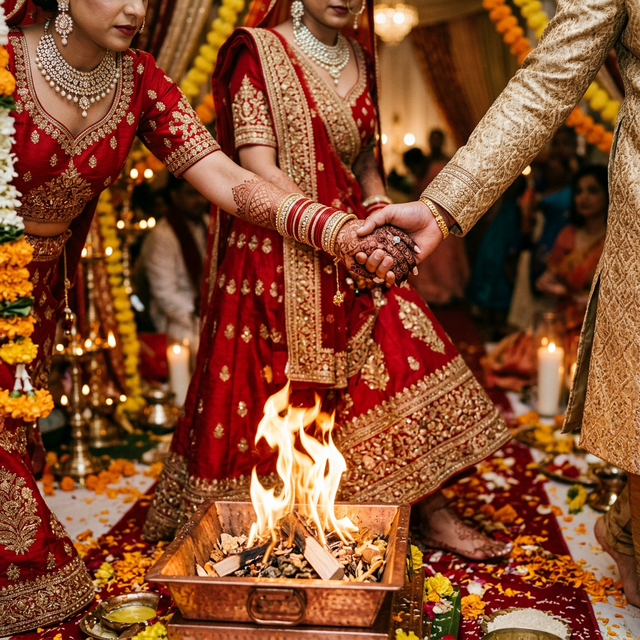
Universally performed across Hindu weddings, the Saptapadi sees the couple take seven steps together around the sacred fire, each step accompanied by a vow — for nourishment, strength, prosperity, wisdom, children, health, and eternal friendship. These seven steps are the legal and spiritual foundation of the Hindu marriage.
Mangalasnanam — The Sacred Bath (South Indian)
In South Indian traditions, the couple's wedding morning begins with a ritual bath preceded by the application of turmeric paste by family members. This purification ceremony is as much about joy and teasing as it is about ritual — a moment of playfulness before the solemnity of the ceremony.
Capturing These Moments with a Digital Invitation
When you book your Magical Star digital invite, you can choose to highlight the specific traditions and ceremonies of your wedding. We craft invitations that speak to your cultural identity — from Vedic motifs for Hindu ceremonies to floral patterns for Christian celebrations — ensuring your invite is as meaningful as your traditions.
Frequently Asked Questions
Can we incorporate two different cultural traditions in our wedding?
Absolutely! Intercultural weddings are a beautiful celebration of diversity. A good wedding planner can help you honour both traditions in a cohesive and respectful way.
Should all rituals be explained to guests on the invitation?
A brief explanation of key rituals in your digital invite is a lovely touch, especially if you have guests who may be unfamiliar with your traditions.
Tags